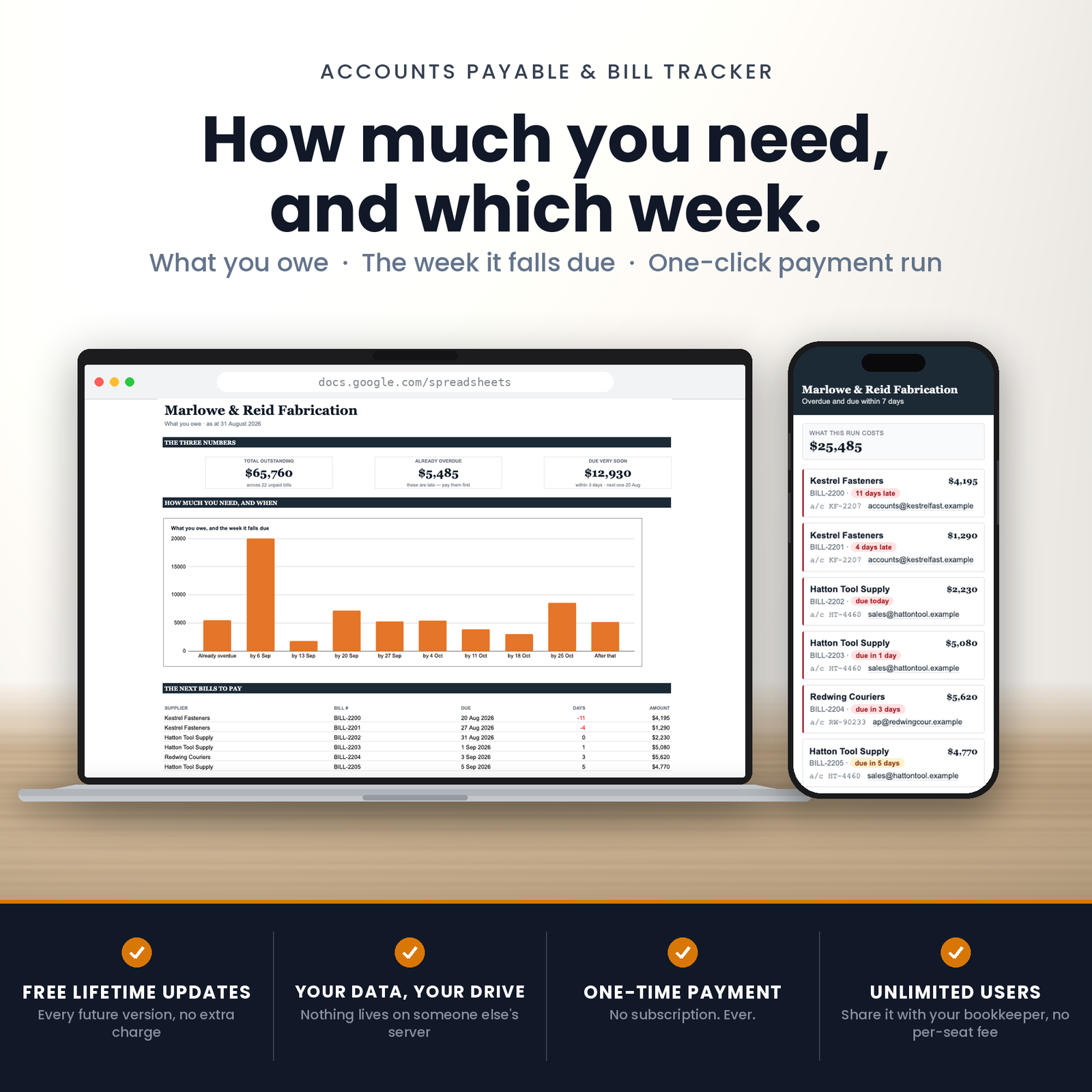
This is an accounts payable tracker for Google Sheets that answers one question properly: how much do I need, and when?
What you are buying
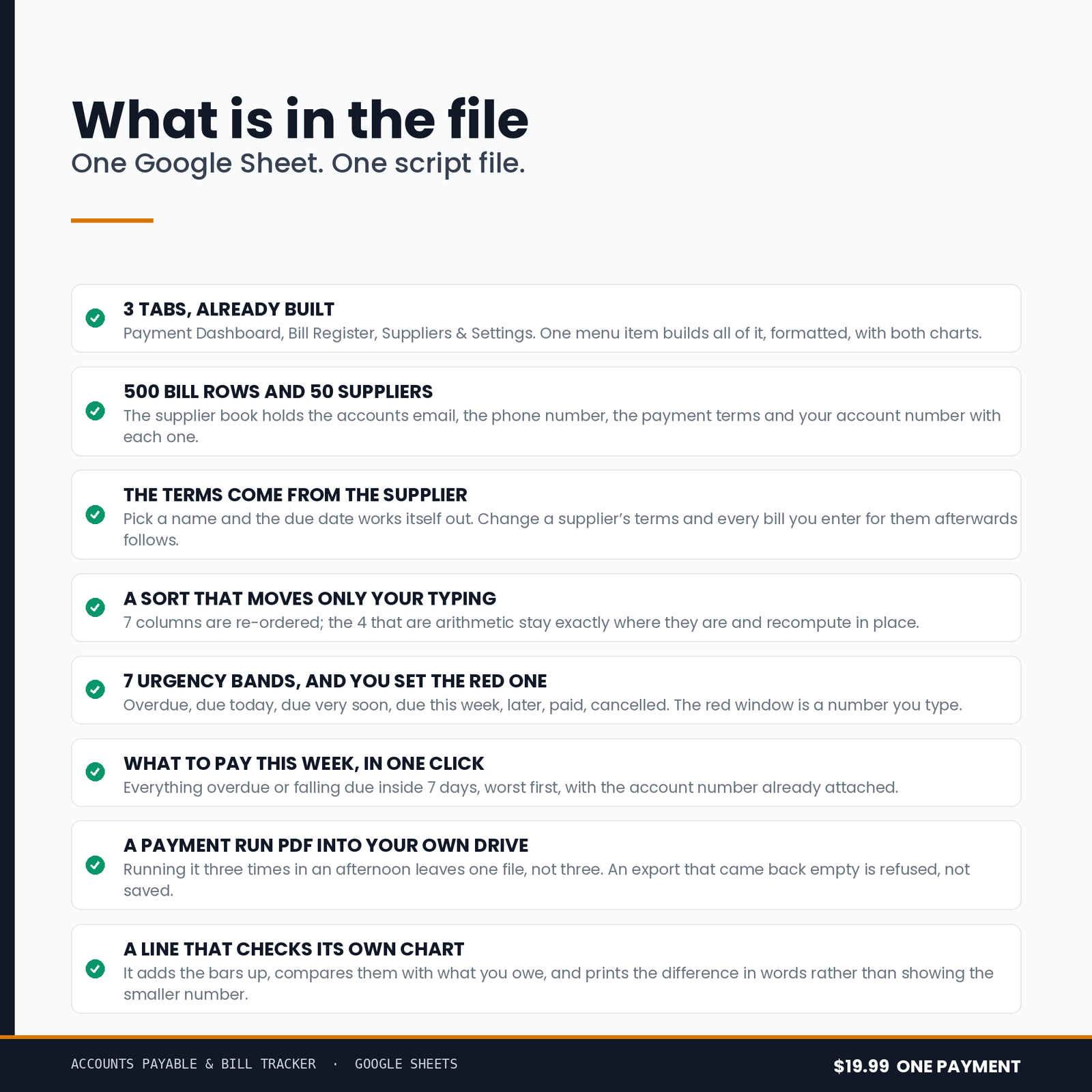
One Google Sheet, copied into your own Drive from a link. Three tabs, built for you in a single run, with a chart and a one-click Payment Run PDF into your own Drive.
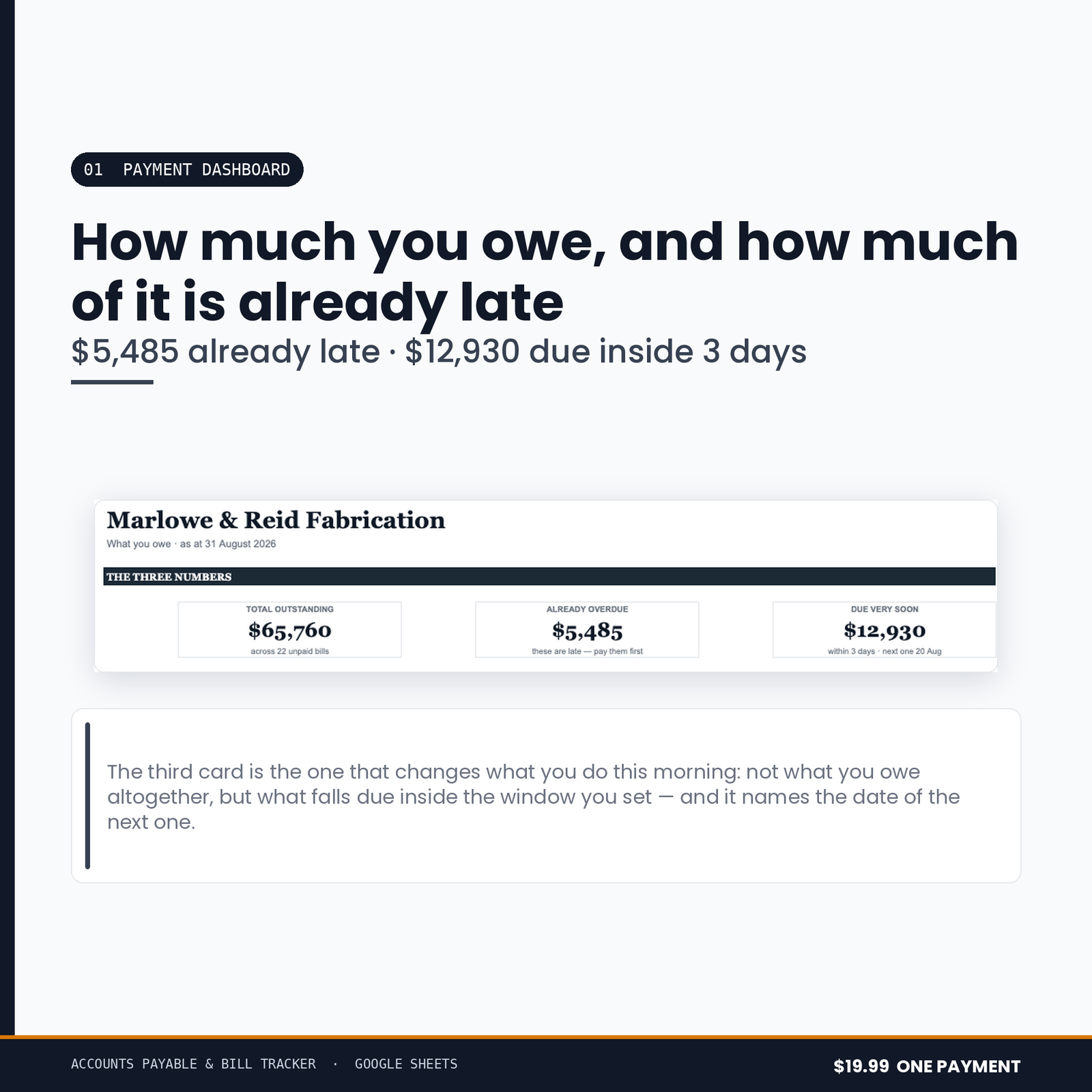
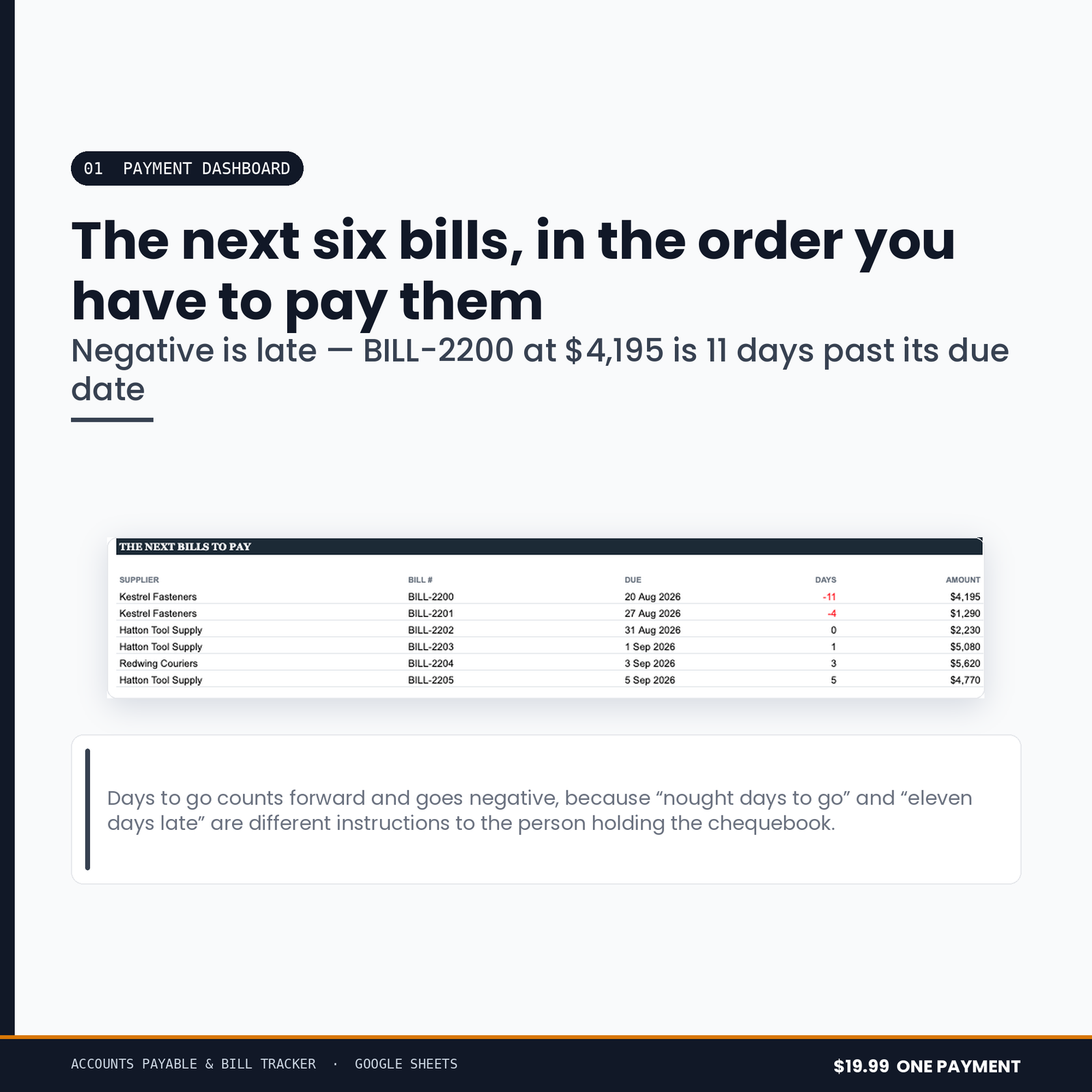
- 01 Payment Dashboard — what you owe, what is already late, and what falls due inside your own window
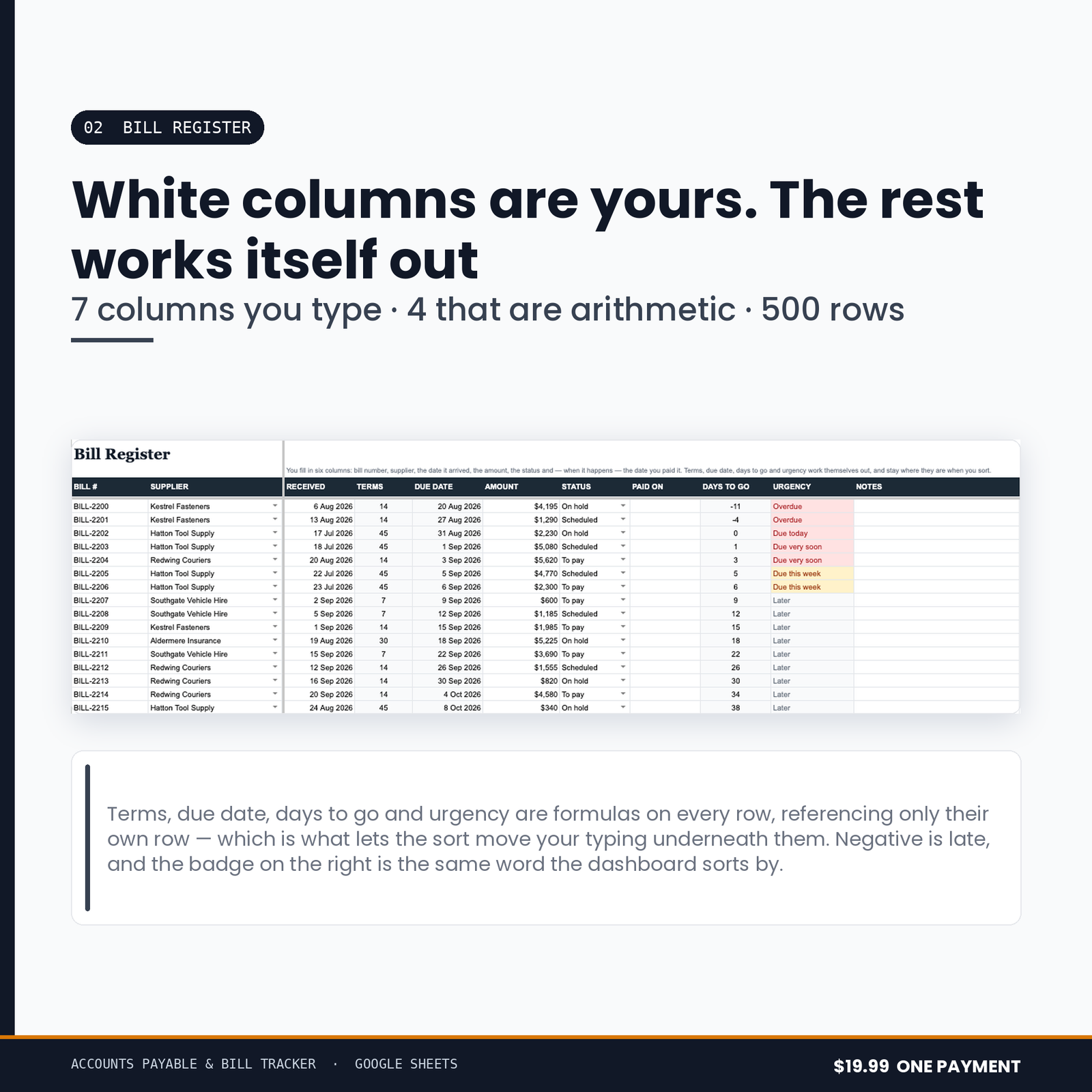
- 02 Bill Register — 500 bills, each one aging and badging itself
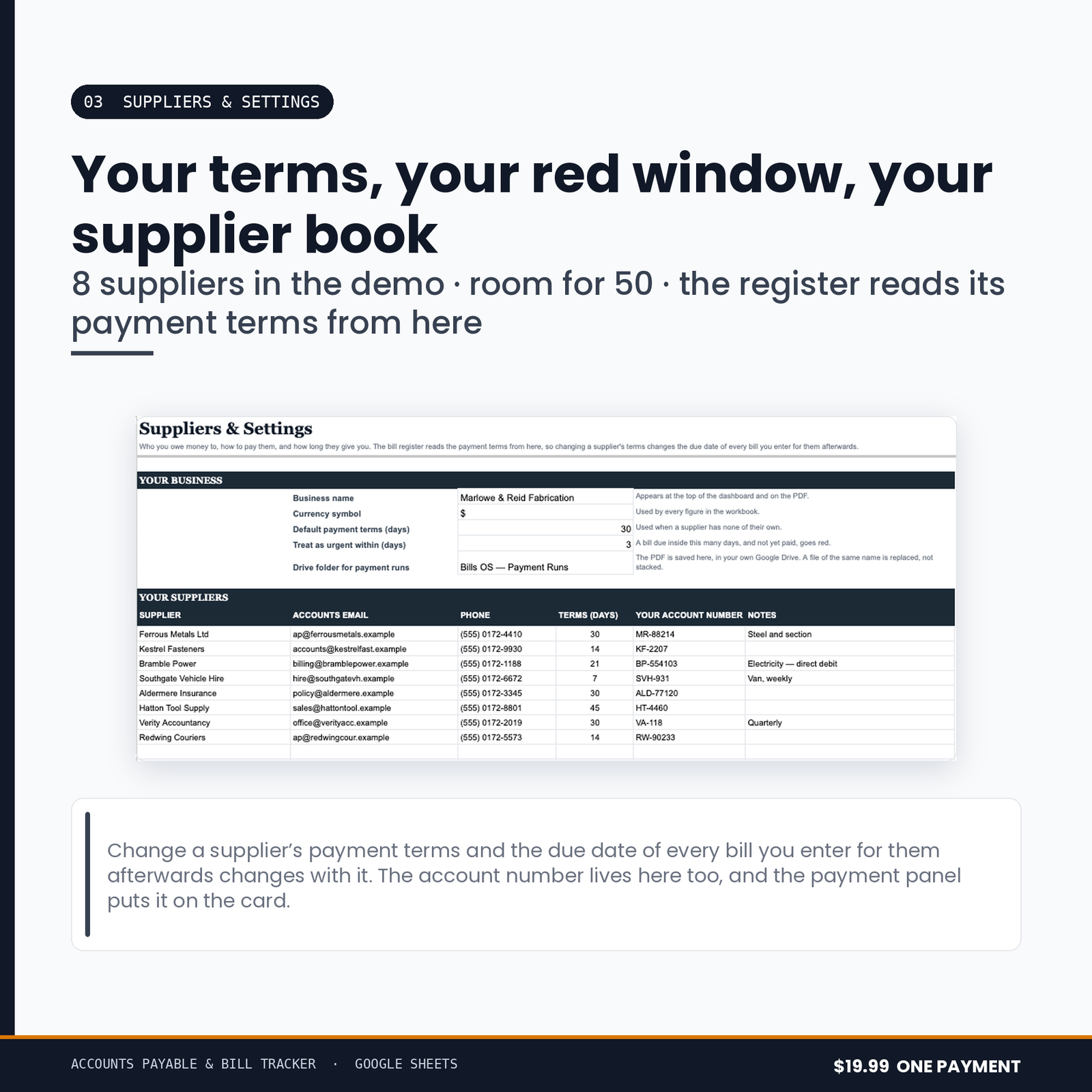
- 03 Suppliers & Settings — who you pay, on what terms, and your account number with each of them
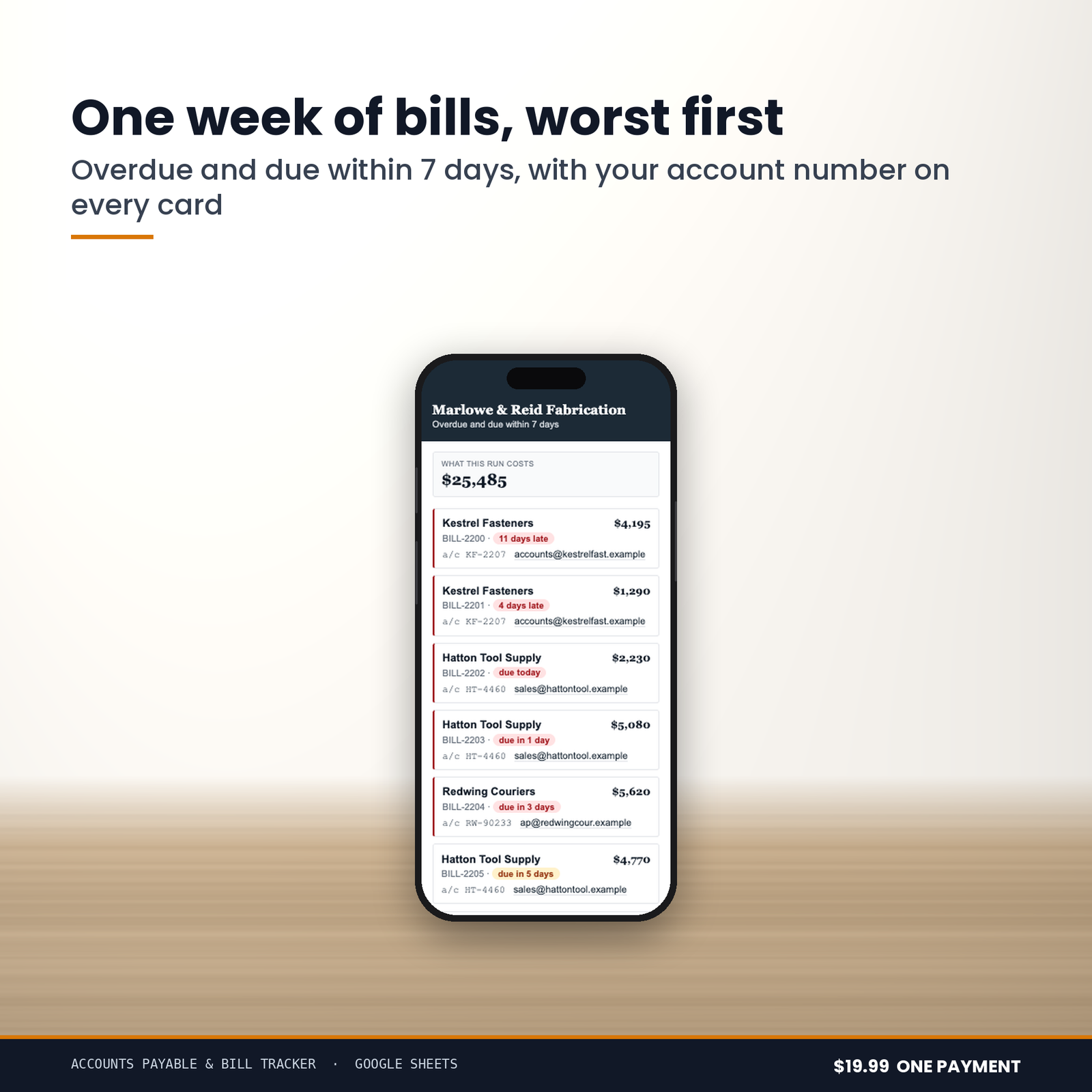
Plus a What To Pay This Week panel built into the workbook itself.
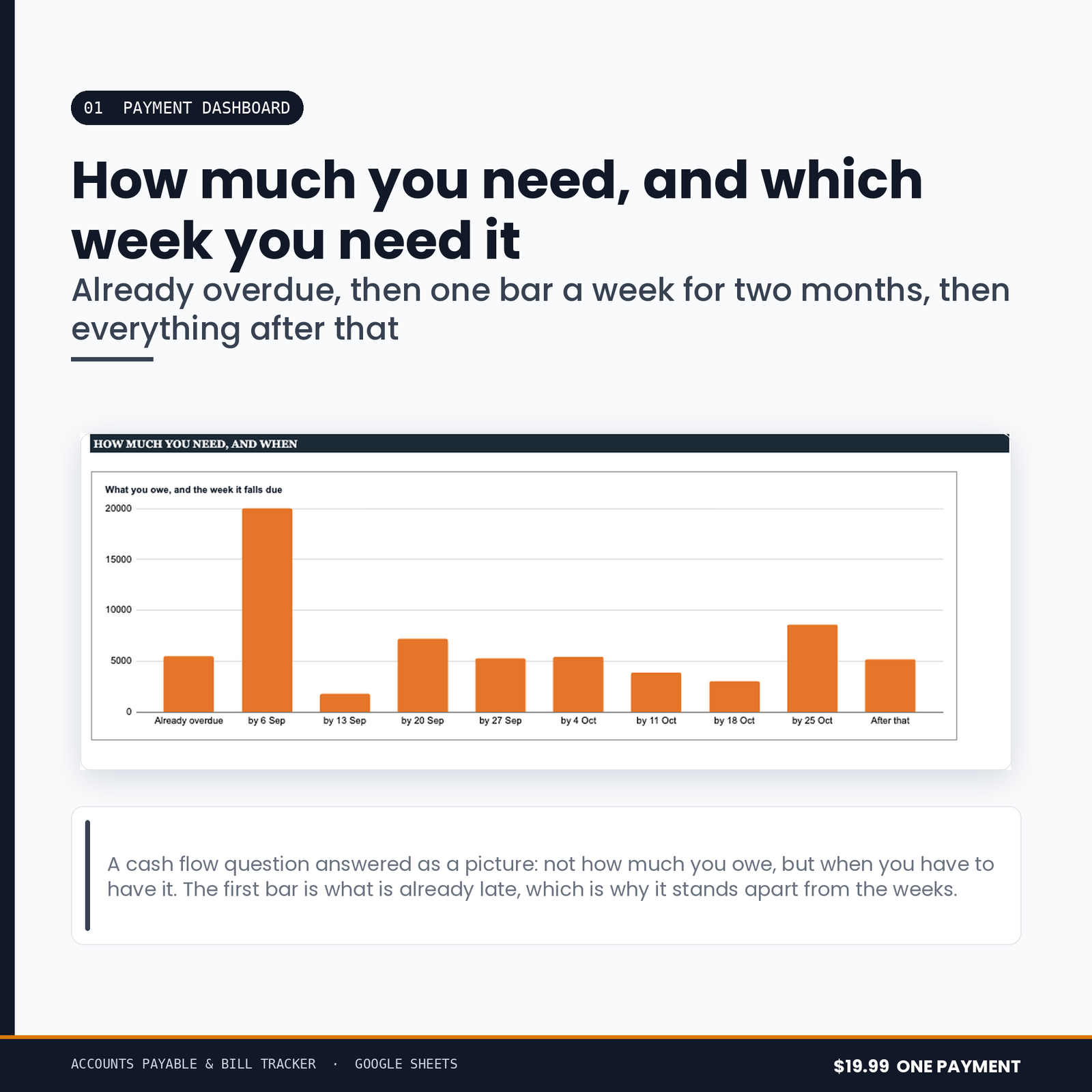
The chart:
- What you owe, and the week it falls due — a column chart, so the week you need cash is visible before it arrives.
What it refuses to do
Anyone can add up a column. This is the list that took the time.
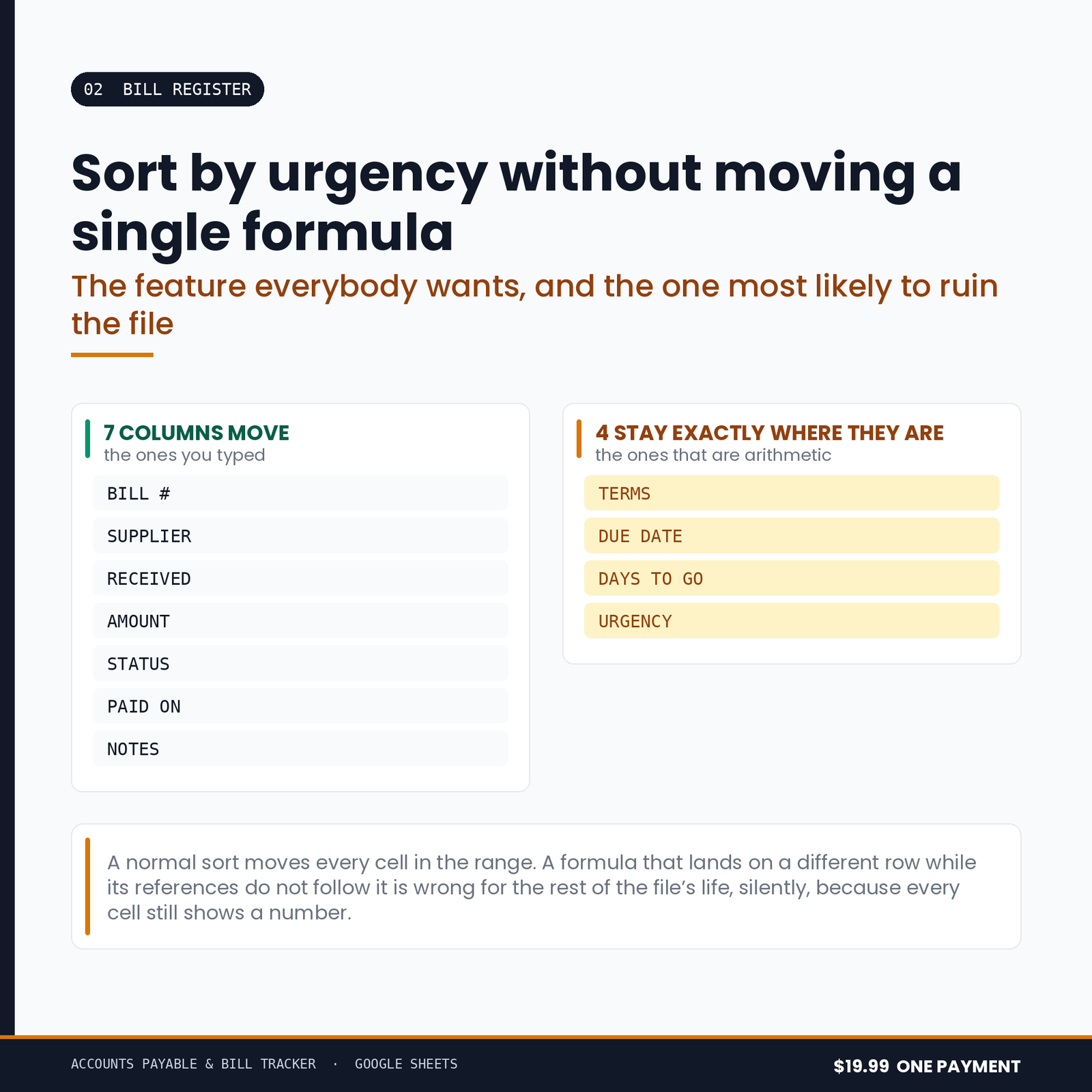
Sort by urgency moves your columns and leaves the formulas alone.
This is the one that breaks every other bill tracker. Sorting a sheet with per-row formulas in it drags the formulas along and every derived cell ends up pointing at the wrong row. Here the sort moves only the columns you typed; the derived ones stay where they are and recompute.
It does not read urgency out of a cell that has not recalculated.
Urgency is worked out from the dates you entered, not from a formula cell that may still be showing last second’s answer.
A paid bill does not stay red.
Mark it paid and it stops shouting. A register where settled bills are still flagged is a register you stop reading.
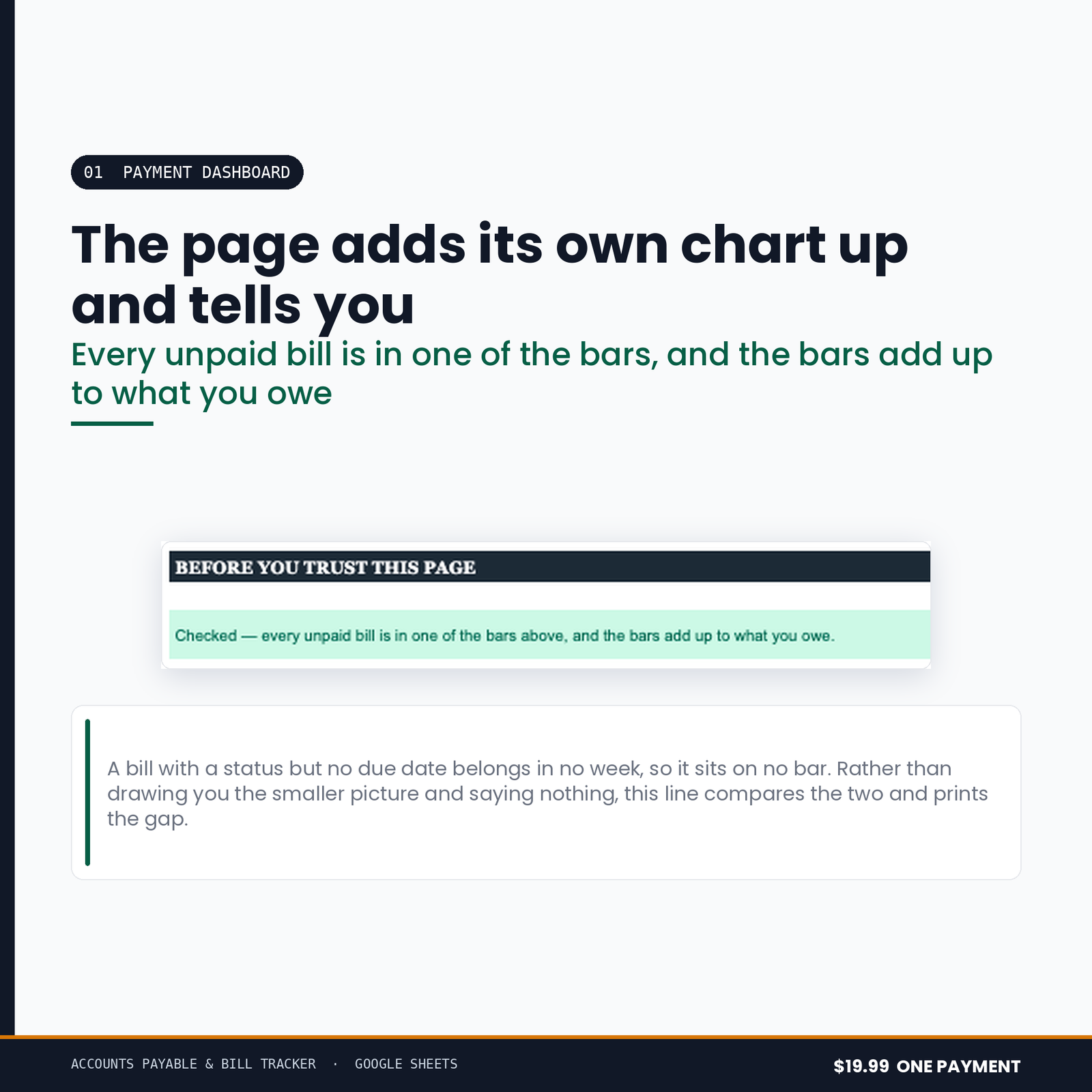
The chart is never quietly short of what you owe.
What the chart adds up and what the register adds up are checked against each other, and the page says so.
Nothing in this suite can email anyone
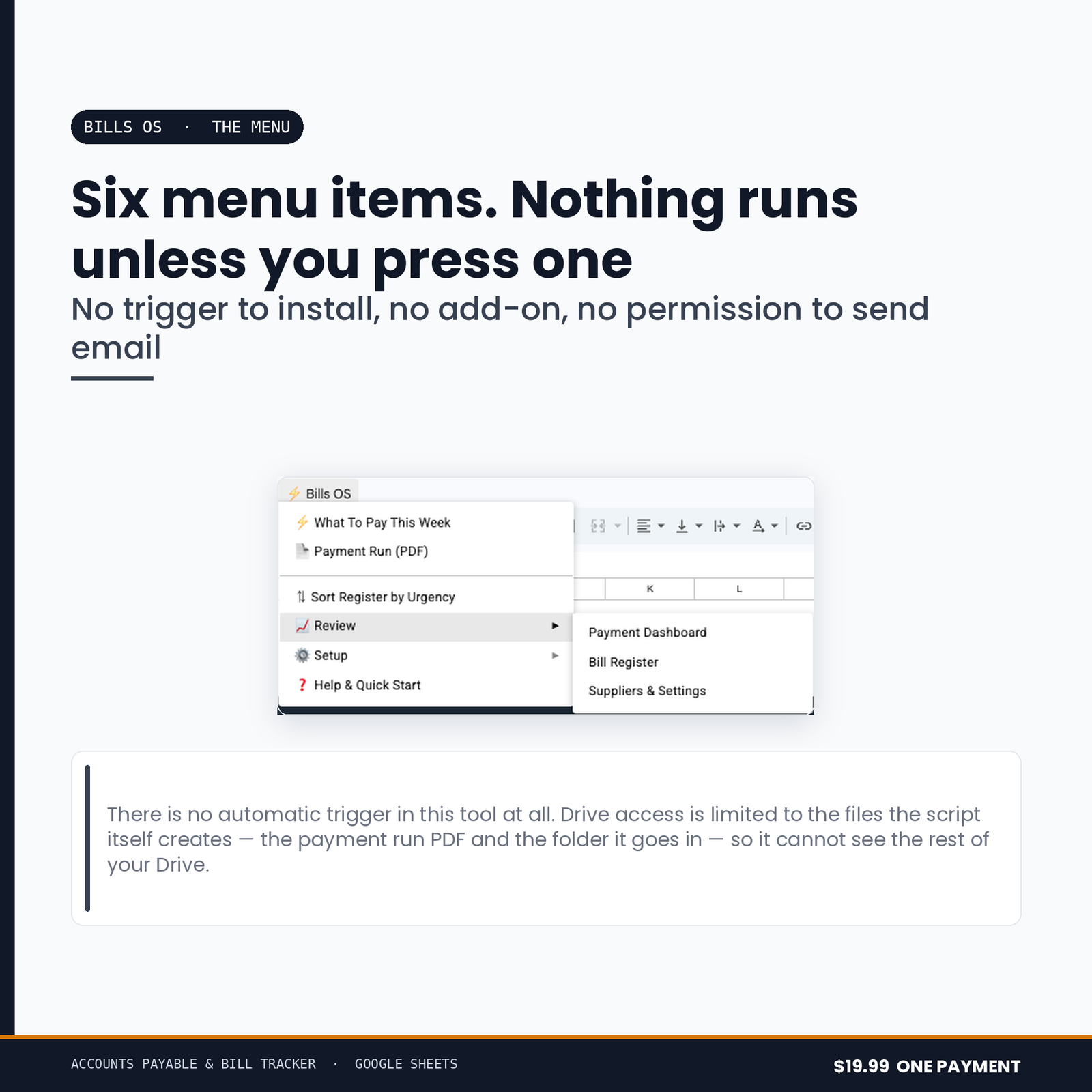
Not one of these five tools requests a Gmail permission of any kind. That is a stronger promise than a line in a description saying it would never do such a thing: it could not email your customer, your supplier or your accountant if a future version tried, because the permission to do it was never asked for.
Drive access is drive.file — only files the script itself creates. It cannot see the rest of your Drive. Your figures stay in your own Google account.
From purchase to working, in about fifteen minutes
You get a link and a 10-page PDF setup manual. Press the link, and Google makes you your own copy of the workbook — there is no account to create, no add-on to install and nothing to paste into a script editor.
Open your copy, run ⚡ Bills OS → Setup → 1. Build / Rebuild Workbook, and it constructs every tab, formula, border and the chart itself. You format nothing. Then run Setup → Load Demo Bills and look at it working on an invented business before you type a figure of your own — one menu item erases the demo again and leaves every formula in place.
Most of the fifteen minutes is you typing in your suppliers — their accounts email, how many days each of them gives you, and your account number with them. The manual walks all of it, and lists the permissions Google will ask for with a written reason for each one.
What you need
A free Google account. It runs on Google Apps Script, so it will not work in Excel, Numbers or LibreOffice — said here rather than in a refund email.
Buying more than one
All five tools in this range are sold together as the Small Business Financial Control Suite for $49.99. Bought separately the five come to $104.95.
Before you buy
This is a spreadsheet, not an accountant. It applies no accounting standard, offers no assurance, and is not a substitute for a qualified accountant or bookkeeper. Nothing in it is tax, financial or legal advice, and nothing it produces has been approved by any authority. Every figure it shows is arithmetic on what you typed into it.